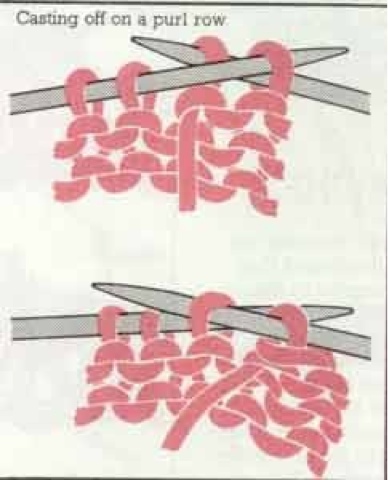
Today I did some hand knitting. I've done it before, but had forgotten the technique of "casting on", "casting off", "knit stitch" and "purl stitch". As you can tell, I only try out the basic stitches today, but I'll probably try out more technical ones in my own time as "development".
Casting on.
Knit stitch.
Purl stitch.
My sample kinda ended up in an absolute mess though, so I'm gonna being doing lots of practicing!
Oh, and on Monday I had a 'module review'. How did it go? Well, my tutor liked my sketchbook, but I need to be less "naive" with my work and show clear links between my research and my own work. I also need to expand my knowledge of different types of yarn and fabric. Bleurgh.
Friday, November 30, 2012
Friday, November 23, 2012
Through the hoop.
So this week I learnt to embroider! I've only ever done simple and short sessions of embroidery work before, in GCSE Textiles, so using the 'emboss machine' and 'free machine embroidery foot' on a domestic sewing machine were new experiences to me.
This is what the emboss machine creates (maybe one day I'll be able to create something like this!) The machine has lots of needles bundled together and as the go through the fabric, the material "fluffs up". If you put another fabric underneath, the needles will make the bottom fabric "fluff up" through the top material. This is how the example below was produced.
And this is what the free machine embroidery foot on a domestic sewing machine can create (if one is skilled enough, which isn't me!)
For my Friday 'Introduction to Textile Applications' module, I experimented with a variety of hand embroidery stitches. I'll use this knowledge to develop patterns in my sketchbooks, and work into my samples of knitting and screen printing. (I've gone with a "fruity theme" for this module, so I'll be using citrus coloured embroidery thread!)
Just before I finish this week's post, look at these vintage embroidered beauties! Can I have all of them please? ;-)
Friday, November 16, 2012
I'm dyeing...
...fabric! Aha. I'm too funny... ;-) So anyway, this week I learnt about it. I mean, I'd dyed fabric before, so this process wasn't anything new to me. However, we conducted an experiment as a class, to see how the length of time that fabric spends in dye effects the intensity of the colour. I hadn't done this before.
Afterwards, I tried out screen printing with "pigment and binder". I cut out stencils of pattens that were influenced by my Monday module sketchbook work, and printed with these (the sae sort of process as discharge printing). I stuck to my colour theme by using a red pigment. I like the outcomes, but I don't like how messy the process is (just like discharge printing).
Pigment and binder mixture.
Screen printing.
I also attended a lecture on 'The Skill of the Maker' - "Making is the most powerful way that we solve problems". It explained how important art and design are.
Annnnd I learnt how to use 'punch cards' on the knitting machines. I couldn't quite get the hang of it at first, but after a while, I understood the process and really like the results of the samples I produced.
Example of a punch card.
Example of what it creates. Admittedly, mine didn't turn out quite as big and perfect....
Tuesday, November 13, 2012
What exactly is fashion?!
So at the end of last week's seminar, we were all asked "what is fashion?" Here's my thoughts.
Dress made by me, from a 'Simpsons' duvet cover. :L
- It's an expression, a way of expressing one's self that can't be shown in any other way.
- It's part of society, it's all around us.
- It's an influence.
- Fashion means different things to different people. Some people love it, even addicted to it. Others don't see a point to it and just wear "whatever".
- Fashion is clothes, shoes and accessories that many people adopt and wear, copying each other. However, you can also "be unique" and, for example, wear 'vintage' (like me, aha). (Although so many people wear vintage now that it's kind of lost its "unique" label. This also applies to 'goth', 'emo', 'steam punk', 'hippie', etc.
- However, when people talk about/say "fashion", they generally refer to what's being shown on the current catwalk collections, and what's being sold in mainstream retail shops.
- IT'S REALLY HARD TO DEFINE WHAT EXACTLY FASHION IS!
I mean, I'm not exactly what one would call "fashionable"... :-P
Dress made by me, from a 'Simpsons' duvet cover. :L
Friday, November 9, 2012
Knit one, purl one.
As you can probably guess from the title of this post, I've mostly been doing knitting this week. But not in the usual way... I've been using one of these...
In case you can't tell what it is, it's a knitting machine (or a whole bunch of 'em, to be honest :-P). Before this week, I'd never used a knitting machine. So at the start, I felt pretty negative about using one and couldn't work out all the different stitches, and how to set up the machine for them. However, by the end of this week, I feel I've really improved and feel much more confident in my abilities. I've got to say though, I much prefer hand knitting and find it much more relaxing!
This week's lecture was about 'Sensory Research Methods'. It was read out by 'Laura Jackson-Wills'' and it was interesting to hear the different processes she went through to create her 'final piece' for her own studies. The lecture helped me understand how I should conduct research, get inspiration and create work from all of this. I related to the nostalgia and "Englishness" she spoke about because I visit the places that were mentioned and I'm a big fan of "looking at the past" and "being English" (mostly by drinking lots of tea and eating lots of cake :-P).
After the lecture, there was a seminar where we talked about how many mainstream retail shops, like 'Topshop', 'Claire's' and 'Next' copy high-end fashion designers. For instance, Next copied the prints from 'Prada's' autumn/winter 2012 collection...
Next.
Prada.
...and Claire's have previously copied some of 'Tatty Devine's' jewellery designs. (Obviously the ones without tags on are Tatty Devine).
Friday, October 26, 2012
William Morris and all that jazz.
This week, I attended a lecture on the 'History of Art and Design'. 'William Morris' and 'John Ruskin' were 2 of the artists mentioned during the lecture. I'm a fan of William Morris' work, but have only vaguely heard of John Ruskin.
'Jasmine' (1872) by William Morris.
'Illustration for The Stones of Venice' (1853) by John Ruskin.
Other points that were mentioned during the lecture:-
- A stunning plate created during the Movement.
'Jasmine' (1872) by William Morris.
'Illustration for The Stones of Venice' (1853) by John Ruskin.
Other points that were mentioned during the lecture:-
- The 'Arts and Crafts Movement' - I'm a fan of this, and how much it "stood out". The work from it is absolutely stunning.
- A stunning plate created during the Movement.
- The 'Bauhaus School' - a German Art School that was built before WWII, and it bought together every sort of "art person" (designers, writers, etc.) However, in the lead up to WWII, it was turned into a Nazi training centre. I would have loved to have studied there!
I also produced some discharge prints this week, as well as layering my stencils on top of each other, and photocopying them to make different types of patterns.
This kind of explains it...
I tried a technique of placing the patterned insides of envelopes underneath my stencils, and photocopying them too.
Tuesday, October 23, 2012
Making a speech about it....
So last Wednesday I attended a lecture on 'What is an art school?' There was a seminar afterwards and were asked to write what we thought an art school should be. So here's my thoughts...
An art school should teach you new techniques that you might never of thought about or you thought might be too hard (when really, they're pretty easy). Critical advice should be given on how to improve one's work, if needed. Students should be introduced to equipment that they have never heard of, in order to expand their knowledge. Students should feel inspired in many ways, by different things. Teachers should talk about different artists and designers, both well-known and not so, in order to show pupils the variety of art in the world. Students should be given help to find opportunities where they can showcase their work or acquire work experience with a well-known artist or designer. Fair boundaries, deadlines and rules should be set. Pupils should be able to have the freedom to express themselves through both their work and voice. Different styles of painting, drawing, designing and making should be taught, so that students can show an ability to learn and change. Both traditional and modern techniques should be taught. Help must be given when students need it. The environment should be friendly and relaxed to prevent arguments and stress. Information should be provided in a way that one can "take it in" and not be confused by it. A variety of young people must be educated at art schools, no matter what social class they belong to, and how much money their family has. It is about how much passion they have for the subject, and how much it means to them...
Moving on to a completely different subject, on Monday I used the photos from the Colchester town trip in a different way that last time. I ended up creating "fashion drawings" inspired by the structures of the different buildings, statues, etc. I must admit though, they didn't turn out quite as cool as these...
Subscribe to:
Posts (Atom)